



INCLUSIVE PEDAGOGY

Inclusive pedagogy is fundamental to student success and sits at the heart of your teaching. The evidence-based practices below are taken from the Inclusive Pedagogy domain of the Teaching Effectiveness Framework.

1) START WITH KEY PRACTICES

Colorado state green icon of a person walking up stairs

BEGIN WITH TRAINING AND SELF-REFLECTION

Engage in self-reflection and training related to inclusive practices. Being aware of your own background can help you mitigate assumptions, biases, and microaggressions that occur in your classroom, helping to create an inclusive and productive learning environment.

Check CSU’s Office of Inclusive Excellence for training opportunities.

Colorado state green icon of two people talking and shaking hands

GET TO KNOW YOUR STUDENTS

Know who is in your course, why they are taking it, and what they most want to learn. Call your students by their correct name and pronouns. If you are unable to memorize student names, create a seating chart or ask students to create name tents.  Be responsive to religious holidays and keep current on contemporary cultural issues, considering how these issues may be impacting students in your class.

Colorado State green checkmark icon

CHECK YOUR COURSE MATERIALS FOR INCLUSIVITY AND ACCESSIBILITY

Choose and create course materials that deliberately reflect the diversity of contributors to your field and the students in your course. This includes texts, videos, examples, visuals on slides, test questions, and assignments. It is important for students to see themselves in the course and in the field.

Ensure all electronic content is accessible. This includes PDF’s, Word documents, content slides, multimedia, web content, and Canvas. Go to the Assistive Technology Resources Center for information and tutorials.

two Colorado State green gears working with eacother

INTEGRATE INCLUSIVE TEACHING STRATEGIES

If lecturing is your prominent teaching strategy, take the next step to interactive lecturing where lecture is broken into 8 – 10 minute segments with processing activities after each segment. Activities might include turning to a peer and explaining the concept to each other, discussing and answering an i-clicker question, writing a “so what” paragraph about a concept, sketching a concept, explaining to a peer how a concept links to another concept, making a prediction, or arguing for or against something. In other words, inclusive teaching intentionally engages students with course material.  

Colorado State Green Laptop Icon

ADDITIONAL CONSIDERATIONS FOR TEACHING ONLINE

In online courses, much of the material is delivered in writing. Written delivery may present certain challenges for students whose first language is not English. This can be addressed by offering various delivery formats like video, captions, transcripts, podcasts, etc. for students to engage with content.

2) USE THE TEACHING EFFECTIVENESS FRAMEWORK TO DEVELOP YOUR TEACHING

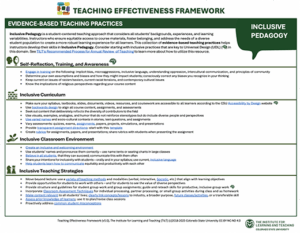
EVIDENCE-BASED PRACTICES

Try some of these evidence-based teaching practices in your course

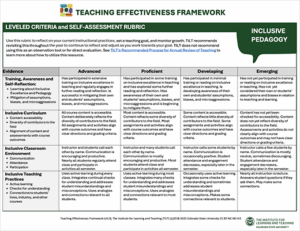
SELF-REFLECTION RUBRIC

Self-Reflection rubrics for you to use as you reflect on your teaching practice

REFERENCES & RESOURCES

Take a deep dive into Inclusive Pedagogy


FOR ANNUAL REVIEW OF TEACHING

1) Choose a Domain

2) Set One Goal

3) Learn and Practice

4) Reflect

Starting with one goal, the step-by-step guidance takes the guesswork out of the annual review process

TILT PROFESSIONAL DEVELOPMENT

Teaching Effectiveness domains bubbles

Best Practices in Teaching (BPiT) courses that align with the Incslusive Pedagogy Domain

  • Inclusive Pedagogy 1
  • Inclusive Pedagogy 2
  • Accessible and Inclusive Electronic Content

Teaching Squares Program

Observe and be observed by colleagues in a non-evaluative, supportive, and growth-based way

Teaching Effectiveness Initiative Program

Earn an Inclusive Pedagogy domain certificate

RECOMMENDED

READING

Selected chapters from these recommended books directly address inclusive pedagogy.

Stop by TILT 231 to check out a copy or learn more about our Book Club Kits.  

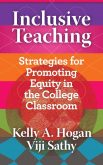
  • Inclusive Teaching: Strategies for Promoting Equity in the College Classroom
  • How Learning Works (CH 1, 5)
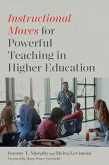
  • Instructional Moves for Powerful Teaching in Higher Education (CH 1)
  • Engaged Teaching: A Handbook for College Faculty (CH 9)
  • What the Best College Teachers Do(Chap 2, 4)