

STUDENT MOTIVATION
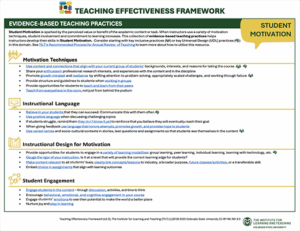
Student motivation can lead to better attendance, student engagement, and student success. The evidence-based practices below are taken from the Student Motivation domain of the Teaching Effectiveness Framework.
1) START WITH KEY PRACTICES
BELIEVE IN YOUR STUDENTS!
When you truly believe that all students can succeed, your attitude and language will most likely be motivating to them. Promote this same mindset in students, so they believe in themselves. When students believe in themselves and their ability to learn, they can better handle difficult tasks and recover from failure when it happens.
BUILD CLASSROOM RAPPORT
Offer praise for student questions, mistakes, and academic risk-taking. Make space in your assignments for practice, error, and revision. This allows students to engage in thinking and problem-solving rather than worrying. Check in with students who are not participating.
MAKE CONNECTIONS FOR YOUR STUDENTS
...AND MODEL HOW THEY CAN MAKE THEIR OWN CONNECTIONS
Students are motivated when they see the relevance of content as it pertains to other courses, their future, and the potential to make the world a better place. Get to know your students, their backgrounds, interests, and reasons for taking your course. Make connections between your content and your current group of students
IN LARGE CLASSES Survey or i-Clicker questions can help you get to know your students and make connections to their interests and their world.
PROVIDE OPPORTUNITIES FOR STUDENTS TO THINK, INTERACT, AND REFLECT
Provide space for students to internalize the material. Vary how you deliver course content; incorporate time to listen to, think about, read, and discuss content during class. Circulate the room while students are working in groups and support them by modeling and providing guidelines for how they can best engage with content and each other.
ADDITIONAL CONSIDERATIONS FOR TEACHING ONLINE
Establish an audio and video presence in your online and hybrid courses to help your students feel comfortable with you. View this video from Dr. Julie Taylor-Massey for inspiration.
2) USE THE TEACHING EFFECTIVENESS FRAMEWORK TO DEVELOP YOUR TEACHING
FOR ANNUAL REVIEW OF TEACHING
1) Choose a Domain
2) Set One Goal
3) Learn and Practice
4) Reflect
Starting with one goal, the step-by-step guidance takes the guesswork out of the annual review process
TILT PROFESSIONAL DEVELOPMENT
Best Practices in Teaching (BPiT) courses that align with the Student Motivation Domain
- Student Motivation
- Classroom Climate
- Accessible and INclusive Electronic Content
Observe and be observed by colleagues in a non-evaluative, supportive, and growth-based way
Teaching Effectiveness Initiative Program
Earn a Student Motivation domain certificate
RECOMMENDED
READING


Selected chapters from these recommended books directly address student motivation.
Stop by TILT 231 to check out a copy or learn more about our Book Club Kits.
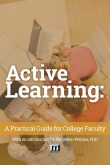
- Active Learning: A Practical Guide for College Faculty (Part 1)
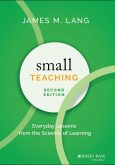
- Small Teaching (CH 7-9)
- How Learning Works (CH 4)
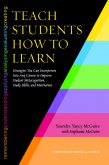
- Teach Students How to Learn (CH 6-9)
- Engaged Teaching: A Handbook for College Faculty (CH 3, 7)
- What the Best College Teachers Do (CH 2, 4)