

CLASSROOM CLIMATE
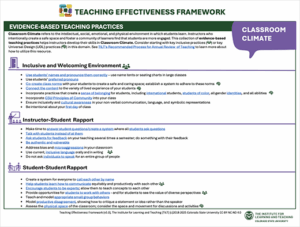
A positive classroom climate has been associated with engagement, persistence, and motivation. Instructors are the first to set the tone for a class. The evidence-based practices below are taken from the Classroom Climate domain of the Teaching Effectiveness Framework.
1) START WITH KEY PRACTICES
FOSTER AN INCLUSIVE AND WELCOMING ENVIRONMENT
From the first day, intentionally create a welcoming learning space where students feel valued and confident. Be intentional in letting your students know they have earned their place in the classroom, that they belong, that their ideas, experiences, and opinions matter.
BUILD CLASSROOM RAPPORT
A classroom learning community begins with the instructor. Get to know your students: their names, the correct pronunciation of their names and preferred pronouns, their reasons for taking your course, and their goals. Be authentic and vulnerable with your students. Share something personal that you’re comfortable sharing – your research, your career path, and why you enjoy teaching the course.
Foster student to student rapport to help build a safe, challenging, and supportive community where everyone can learn. Co-create class norms or a community agreement with your students. Incorporate icebreakers and discussion early in the course so that you can discuss, model, and practice working productively in small groups. Monitor student engagement in small groups throughout the semester and encourage students to listen for and learn from diverse perspectives. Debrief group activities with students, both for content and the success of their working together.
IN LARGE COURSES:
Form groups at the beginning of the semester, so that getting into groups doesn’t waste class time. Invite group members to exchange contact information to support each other or form study groups outside of class. Engage these groups during every class, so students get to know their group members and the benefits of discussing content.
ENGAGE STUDENTS OFTEN
Engage students with content and each other during every class. Develop students’ group work skills by teaching and modeling appropriate behaviors for group activities and assignments. Teach students how to handle difficult conversations by modeling productive disagreements and demonstrating how to critique a statement or idea instead of the speaker. When you ask students to work together, make sure they know the purpose and goal of the task. Debrief activities with students as much as possible.
ADDITIONAL CONSIDERATIONS FOR TEACHING ONLINE
A simple way to foster a supportive classroom climate in an online course is to ensure that students can find your content. When the course structure is consistent with logically organized modules and materials, students can focus on learning the course content rather than finding material in the course. Use the CSU Course Template to ensure consistent organization and navigation.
2) USE THE TEACHING EFFECTIVENESS FRAMEWORK TO DEVELOP YOUR TEACHING
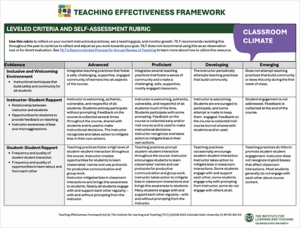
SELF-REFLECTION RUBRIC
Self-Reflection rubrics for you to use as you reflect on your teaching practice
FOR ANNUAL REVIEW OF TEACHING
1) Choose a Domain
2) Set One Goal
3) Learn and Practice
4) Reflect
Starting with one goal, the step-by-step guidance takes the guesswork out of the annual review process
TILT PROFESSIONAL DEVELOPMENT
Best Practices in Teaching (BPiT) courses that align with the Classroom Climate Domain
- Classroom Climate
- First Four Weeks
- Inclusive Pedagogy 1 & 2
- Rethink the Syllabus
Observe and be observed by colleagues in a non-evaluative, supportive, and growth-based way
Teaching Effectiveness Initiative Program
Earn a Classroom Climate domain certificate
RECOMMENDED
READING


Selected chapters from these recommended books directly address classroom climate.
Stop by TILT 231 to check out a copy or learn more about our Book Club Kits.
- Distracted: Why Students Can’t Focus and What You Can Do About It (CH 1-3, 4, 9)
- How Learning Works (CH 1, 5)
- Engaged Teaching: A Handbook for College Faculty (CH 8)
- What the Best College Teachers Do (CH 2, 4, 6)