

CURRICULUM AND CURRICULAR ALIGNMENT

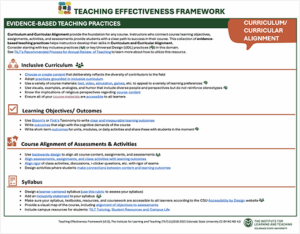
Clear course outcomes that align with all assignments, activities, and assessments provide students with a map of your course, which helps them learn, allowing them see the big picture and make connections within the course.

1) START WITH KEY PRACTICES

trial garden red double arrows pointing to the left

USE BACKWARDS DESIGN TO ALIGN ALL ASSESSMENTS AND ACTIVITIES WITH COURSE OUTCOMES

Start with a numbered list of the course outcomes. In the next column, list all course assignments, assessments, and activities that align with each outcome. Make sure everything in the course is aligned; cut any extraneous content that does not directly fit with course outcomes or are a ‘nice to have.’ Less is more. Students gain more from deep learning and critical thinking about key concepts.

trial garden red icon of arrow and bullseye

BE INTENTIONAL IN CHOOSING COURSE MATERIALS

VARIETY MATTERS

Use a variety of course materials: text, video, simulation, games, etc. to appeal to a variety of learning preferences. Give students many opportunities to think about, read, watch, listen to, and discuss content during class.


MAKE YOUR CURRICULUM INCLUSIVE

Choose course content and curriculum representing a wide variety of contributors to the field so that all students can see themselves in the discipline. Make sure all course materials, technologies, and activities are accessible per CSU guidelines and ADA mandates.

trial garden red icon an individual and 8 arrows point toward the person

CREATE A STUDENT-CENTERED SYLLABUS

THE SYLLABUS DOCUMENT

A syllabus is no longer considered merely a contract between instructor and student but rather an opportunity to set a supportive and welcoming tone with positive language that signals to students your belief they can and will be successful. Here are a few other considerations for syllabus opportunities:

  • Consider co-creating with your students a classroom agreement and other course policies to add to your syllabus.
  • Include a statement that expresses your commitment to an inclusive and equitable classroom, where diverse experiences and viewpoints are encouraged and valued.
  • Use this accessible syllabus template
  • Include a course map that shows alignment between course content, activities, assignments, and other assessments.
  • This rubric will help you create a student-centered syllabus
  • Use this accessible syllabus template
Flower Trial Red laptop icon

ADDITIONAL CONSIDERATIONS FOR TEACHING ONLINE

As you create your online modules, include the learning objectives at the beginning of each module. Let the learning objectives guide the content and assignments included in each module.

2) USE THE TEACHING EFFECTIVENESS FRAMEWORK TO DEVELOP YOUR TEACHING

EVIDENCE-BASED PRACTICES

Try some of these evidence-based teaching practices in your course

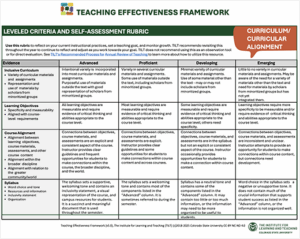
SELF-REFLECTION RUBRIC

Self-Reflection rubrics for you to use as you reflect on your teaching practice

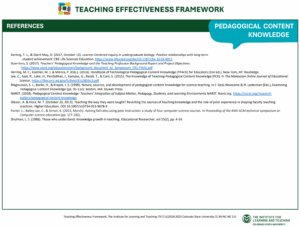
REFERENCES & RESOURCES

Take a deep dive into Curriculum and Curricular Alignment

FOR ANNUAL REVIEW OF TEACHING

1) Choose a Domain

2) Set One Goal

3) Learn and Practice

4) Reflect

Starting with one goal, the step-by-step guidance takes the guesswork out of the annual review process

TILT PROFESSIONAL DEVELOPMENT

Teaching Effectiveness domains bubbles

Best Practices in Teaching (BPiT) courses that align with the Curriculum and Curricular Alignment Domain

  • Learning Outcomes and Course Alignment
  • Creating Assignments
  • Planning for Critical Thinking
  • Rethink the Syllabus

Teaching Squares Program

Observe and be observed by colleagues in a non-evaluative, supportive, and growth-based way

Teaching Effectiveness Initiative Program

Earn a Curriculum and Curricular Alignment domain certificate

RECOMMENDED

READING

Selected chapters from these recommended books directly address Curriculum and Curricular Alignment.

Stop by TILT 231 to check out a copy or learn more about our Book Club Kits.  

  • Understanding by Design
  • What the Best College Teachers Do (CH 2, 4)
  • Engaged Teaching: A Handbook for College Faculty (CH 4)